
In brief: Buerger’s disease (thromboangiitis obliterans) blocks the small arteries of the hands and feet, mostly in younger people who use tobacco. The cornerstone of treatment is complete and permanent tobacco cessation; vascular procedures may help save the limb.
What Is Buerger’s Disease?
Buerger’s disease is an inflammatory condition causing clots and blockages in the small and medium arteries of the hands and feet. It is almost entirely associated with tobacco use and is more common in younger adults.
The Tobacco Link
Buerger’s disease is closely tied to tobacco. When smoking is stopped completely, progression usually halts and the risk of limb loss falls markedly; even a single cigarette or passive exposure can trigger a flare. The earlier tobacco is stopped, the better the outcome.
Symptoms & Progression
- Pain, coldness and colour change in the hands or feet
- Painful sores on fingers or toes
- In advanced, untreated disease, tissue loss and gangrene risk
Treatment & Limb Salvage
Stopping tobacco is essential; without it, other treatments are far less effective. In advanced cases, vascular procedures to improve circulation may help save the limb (see peripheral artery disease and minimally invasive vascular surgery).
What Causes Buerger’s Disease and Who Is Affected?
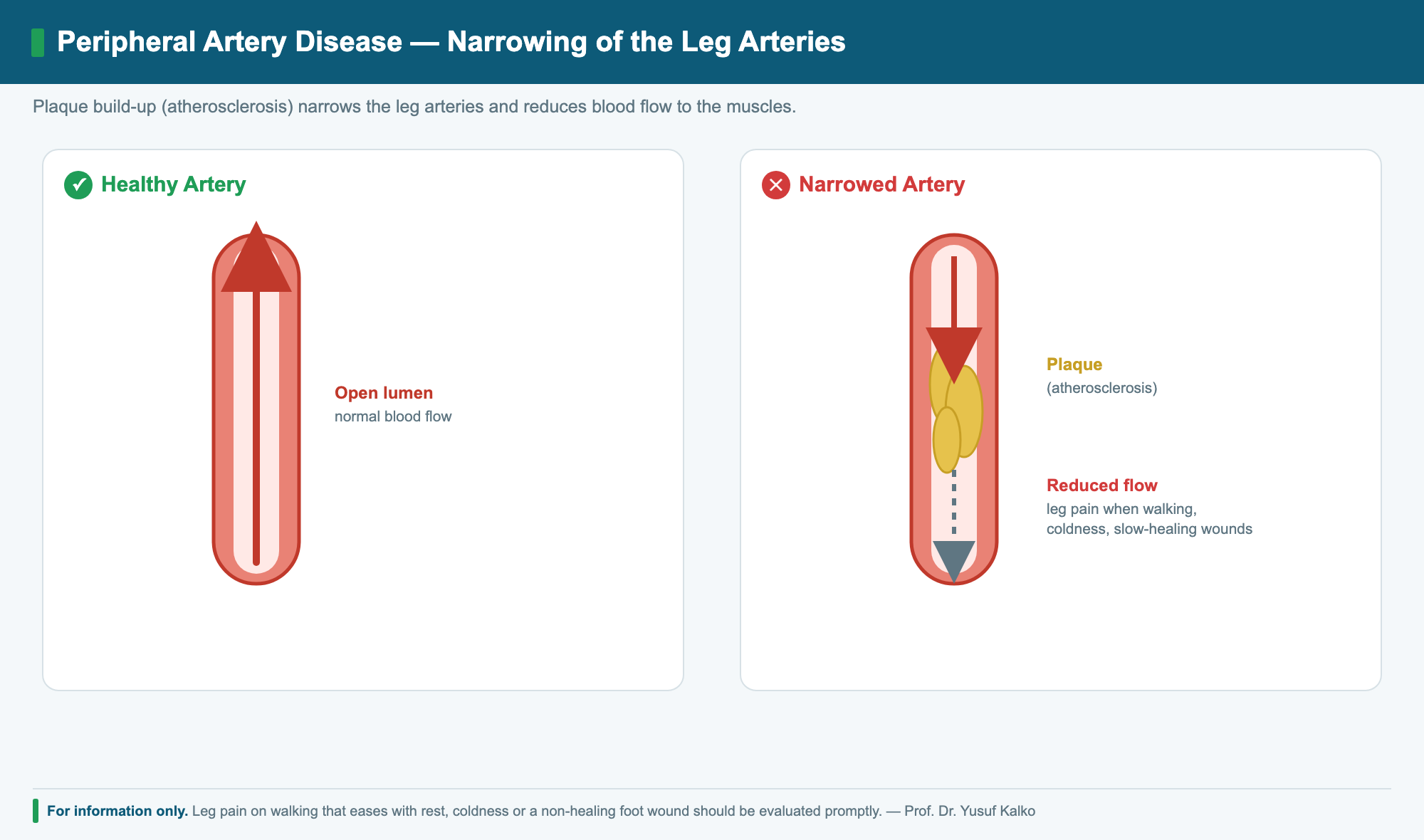
In Buerger’s disease the wall of the artery becomes inflamed and clots form inside it, narrowing or blocking the vessel and reducing blood flow to the hands and feet. The exact cause is not fully understood, but there is a very strong link with tobacco. It typically appears in younger to middle-aged adults who use tobacco, and is more common in men. Unlike atherosclerosis, it is driven by inflammation of the vessel wall rather than plaque build-up, and usually affects smaller vessels at an earlier age.
All Forms of Tobacco Matter
It is not only cigarettes that affect the course of the disease. Every form of tobacco and nicotine exposure — including waterpipe (hookah), cigars, pipes and nicotine-containing products — can trigger and sustain the condition. This is why complete and permanent avoidance of all tobacco is the single most important step.
How Is Buerger’s Disease Diagnosed?
- Examination and history
Assessment of symptoms and tobacco use. - Vascular imaging
Doppler ultrasound and, where needed, angiography to view the affected vessels and rule out other conditions. - Treatment plan
A management approach tailored to the individual situation.
Course of the Disease and Prevention
- When tobacco is stopped completely, progression can largely halt and early limb loss may be prevented
- Protect the hands and feet from cold and from injury
- Do not ignore small sores on the fingers or toes; seek care early
- Regular vascular check-ups are recommended
When should you see a doctor? If you have persistent coldness or discolouration of the fingers, pain at rest, or a sore that will not heal, it is advisable to consult a cardiovascular surgeon without delay.
Frequently Asked Questions
Does Buerger’s disease improve if I stop smoking?
Progression usually halts when tobacco is stopped completely; however, existing damage may not fully reverse, so stopping early is decisive.
Can the limb be saved?
With complete tobacco cessation and, when needed, vascular procedures, many patients can avoid limb loss; delay reduces the chance.
Is this medical advice?
No. This page is for information only; please consult a physician for diagnosis and treatment.
What is Buerger’s disease?
It is a tobacco-related vascular disease (thromboangiitis obliterans) in which the small to medium arteries and veins of the hands and feet become inflamed and blocked.
Which specialty treats Buerger’s disease?
It falls within the field of cardiovascular surgery.
Who is affected by Buerger’s disease?
It typically affects younger to middle-aged adults who use cigarettes or other tobacco products, and is more common in men.
What are the symptoms of Buerger’s disease?
Pain, coldness and colour change in the fingers and toes, leg or foot pain when walking, and in advanced stages sores or darkening at the fingertips.
What causes Buerger’s disease?
The exact cause is not fully known, but it has a very strong association with tobacco use, which triggers and sustains the disease.
How is Buerger’s disease diagnosed?
Through history, examination, exclusion of other conditions, and vascular imaging such as Doppler ultrasound and angiography.
Can Buerger’s disease be treated?
The most important step in changing its course is complete tobacco cessation; treatments that support circulation and relieve pain may also be used.
Are tobacco products other than cigarettes also harmful?
Yes. Every form of tobacco exposure, including waterpipe, cigars, pipes and nicotine-containing products, can sustain the disease.
Is limb loss inevitable in Buerger’s disease?
No. When tobacco is stopped completely, progression can largely halt, and early limb loss may be prevented.
Are Buerger’s disease and atherosclerosis the same?
No. Atherosclerosis involves plaque build-up, while Buerger’s disease is driven by inflammation of the vessel wall and usually appears at a younger age in association with tobacco.
Video — Prof. Dr. Yusuf Kalko
Prof. Dr. Yusuf Kalko explains Buerger’s disease and the critical role of smoking. (Video in Turkish.)
Related
Peripheral Artery Disease · Minimally Invasive Vascular Surgery · Diabetic Foot
This content is for information purposes only and does not replace a medical consultation. — Cardiovascular Surgeon Prof. Dr. Yusuf Kalko