
In short: A diabetic foot problem happens when diabetes damages the nerves (reduced feeling) and narrows the arteries (reduced blood flow), so small injuries turn into ulcers that will not heal and can become infected. Left untreated this can lead to gangrene and amputation. But amputation can often be avoided or reduced with a limb-salvage approach: restoring blood flow, expert wound care, controlling infection and taking pressure off the wound. If you have been told you may lose a foot or leg, a vascular second opinion is worthwhile — sometimes the circulation can be improved and the limb saved. This guide is written for international patients considering a limb-salvage assessment in Istanbul, Turkey. Spreading infection, blackening tissue or fever needs emergency care.
What Is a Diabetic Foot?
Over time, high blood sugar can harm the feet in two ways at once. It damages nerves (neuropathy), so a blister, cut or pressure sore may not be felt. And it narrows the arteries (poor circulation), so wounds receive less oxygen and heal slowly. Add infection to a wound that is not felt and not healing, and a small problem can become a serious one quickly. This combination is what makes the diabetic foot dangerous.
Warning Signs You Should Not Ignore
- A wound, blister or ulcer on the foot that is not healing,
- Numbness, tingling or loss of feeling in the feet,
- The foot feeling cold or pale, or a change in colour,
- Redness, swelling, warmth, discharge or a bad smell (signs of infection),
- Darkening or blackening of a toe.
When It Is an Emergency
⚠️ Spreading redness, swelling and foul discharge, blackening tissue, or fever can mean a serious, fast-moving infection (including wet gangrene). This is a medical emergency — seek care urgently, as prompt treatment can be the difference between saving and losing the limb.
Can Amputation Be Avoided? The Limb-Salvage Approach
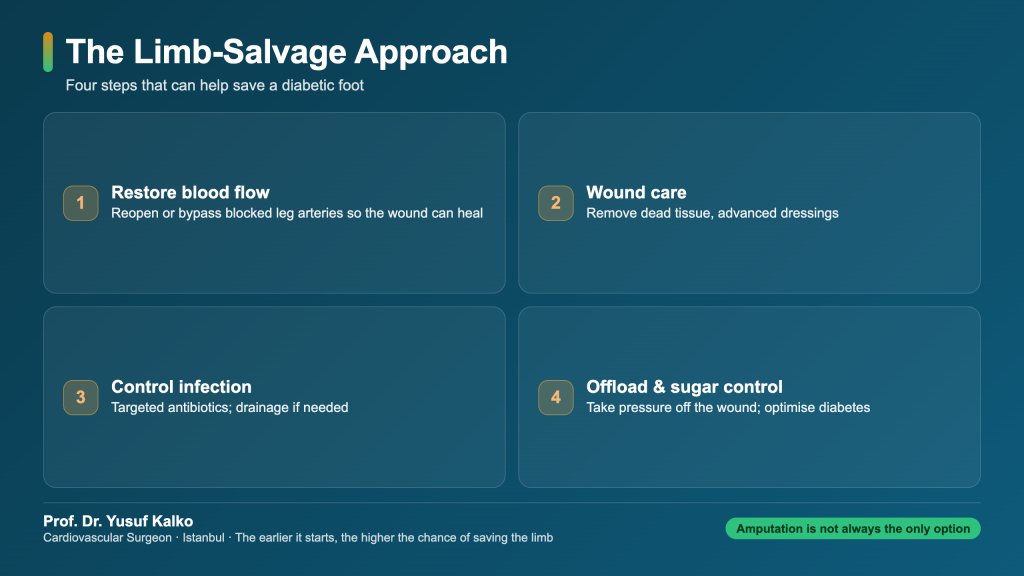
In many cases, yes. Modern limb salvage brings several treatments together, ideally under one team:
| Step | What it does |
|---|---|
| Restore blood flow | Open or bypass blocked leg arteries so the wound can heal |
| Wound care | Remove dead tissue and use advanced dressings |
| Control infection | Targeted antibiotics and, if needed, drainage |
| Offloading & sugar control | Take pressure off the wound and optimise diabetes control |
Why Blood Flow Is the Key
A wound cannot heal without enough circulation. That is why a vascular assessment is central: if the leg arteries are narrowed (peripheral artery disease), reopening them — with balloon angioplasty and a stent, or a bypass — can transform a “non-healing” wound into one that heals. Tests such as the ankle-brachial index and Doppler ultrasound show whether the circulation can be improved.
A Second Opinion Before Amputation
If you or a family member has been told that amputation is the only option, it is reasonable to seek a vascular second opinion first. Sometimes the circulation has not been fully assessed or treated, and improving blood flow can save the foot or reduce the level of amputation. Bringing your records — wound photos, blood tests, and any angiography or Doppler reports — makes a remote review possible before you travel.
Prevention and Daily Foot Care
- Check your feet every day for cuts, blisters or colour changes,
- Keep blood sugar, blood pressure and cholesterol controlled, and stop smoking,
- Wear well-fitting shoes; never walk barefoot,
- Treat any wound early — do not wait for it to become painful (it may not),
- Have your feet and circulation checked regularly.
For International Patients (Istanbul)
International patients — including those facing a possible amputation — can request a limb-salvage assessment with an experienced cardiovascular surgeon in Istanbul:
- Remote review: send wound photos and reports (blood tests, angiography/Doppler) via WhatsApp for a preliminary opinion.
- On arrival: examination, circulation tests (ABI, Doppler) and angiography if needed.
- Treatment: restoring blood flow (angioplasty/stent or bypass), wound and infection care, aiming to save the limb.
- Follow-up: wound monitoring, foot-care advice and coordination with your home team.
Prof. Dr. Yusuf Kalko, Cardiovascular Surgeon in Istanbul (Beylikdüzü), focuses on restoring circulation as part of a limb-salvage approach. Reach the clinic via the contact page.
Frequently Asked Questions
Can a diabetic foot ulcer heal without amputation?
Often yes, especially when treatment starts early and blood flow is adequate or can be restored. Combining revascularisation, wound care, infection control and offloading gives the best chance of saving the foot.
Why do diabetic foot wounds not heal?
Two reasons usually combine: nerve damage means the wound is not felt or protected, and poor circulation starves it of oxygen. Infection then takes hold. Addressing all three is what allows healing.
I was told I need an amputation — should I get a second opinion?
It is reasonable to seek a vascular second opinion. If the leg circulation has not been fully assessed or treated, improving blood flow may save the foot or reduce the level of amputation. A remote review of your reports is a good first step.
How is the blood flow to the foot assessed?
With simple tests such as the ankle-brachial index and Doppler ultrasound, and — when a procedure is planned — CT/MR angiography. These show whether the arteries can be reopened.
What is the most important daily prevention step?
Checking your feet every day and acting on any wound immediately — combined with good diabetes control and not smoking. Because wounds may be painless, they are easy to miss without a daily look.
Is a black toe always lost?
Not necessarily. Blackening signals tissue in trouble and needs urgent assessment, but restoring blood flow and controlling infection can sometimes limit the loss. Early care matters greatly.
How quickly should I act on a diabetic foot wound?
Promptly — ideally within days, not weeks. Spreading infection, blackening or fever is an emergency. Early treatment strongly improves the chance of saving the limb.
How do I start a remote assessment from abroad?
Send clear wound photos and your reports (blood tests, any angiography or Doppler) via WhatsApp for a preliminary opinion, then plan an in-person assessment in Istanbul.
References
- MedlinePlus (NIH) — Diabetic Foot
- MedlinePlus (NIH) — Peripheral Artery Disease (Legs)
- Society for Vascular Surgery
