
In short: Deep vein thrombosis (DVT) is a blood clot in a deep vein, usually in the leg. The classic signs are swelling, pain, warmth and redness in one leg — often the calf. DVT matters because part of the clot can travel to the lungs and cause a pulmonary embolism (PE), which is life-threatening: sudden breathlessness, chest pain or coughing up blood is an emergency. Risk rises with immobility (including long flights), recent surgery, cancer, pregnancy and clotting disorders. Diagnosis uses a blood test (D-dimer) and Doppler ultrasound; treatment is usually blood-thinning medication, sometimes clot removal. Do not try to “wait out” a suddenly swollen, painful leg. This guide is written for international patients, with practical advice on preventing clots during travel to and from Istanbul, Turkey.
What Is Deep Vein Thrombosis?
Blood normally flows steadily back to the heart through the deep veins of the legs, helped by the calf muscles acting as a pump. When blood flows too slowly, clots too easily, or a vein wall is injured, a clot (thrombus) can form — most often in the calf or thigh. This is deep vein thrombosis. The concern is twofold: the clot can block the vein (causing swelling and long-term problems) and it can break off and travel to the lungs.
Symptoms of DVT
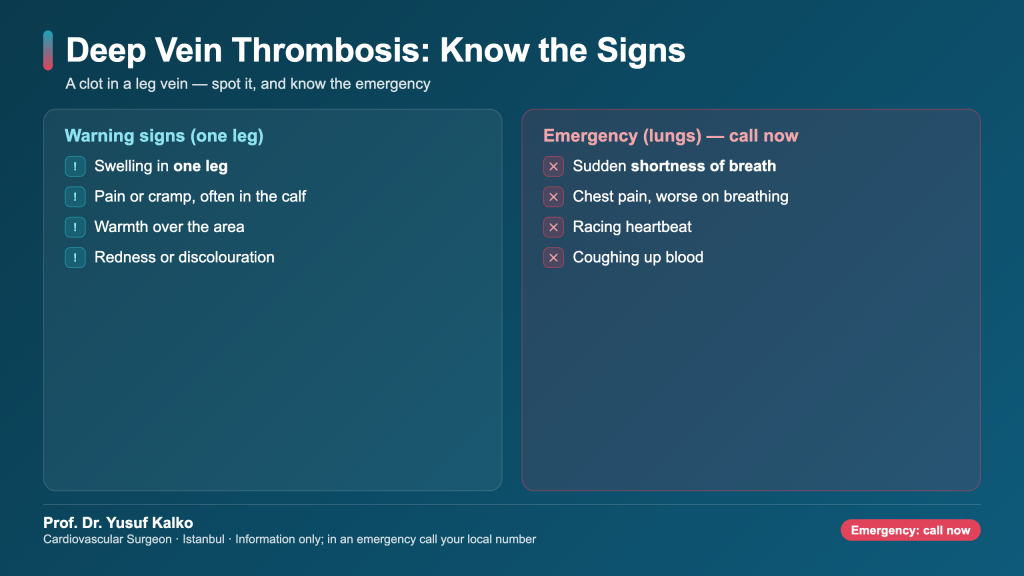
- Swelling in one leg (usually not both),
- Pain or tenderness, often in the calf, sometimes like a cramp,
- Warmth and redness or discolouration over the area,
- A feeling of heaviness or tightness in the leg.
Some clots cause few symptoms, which is why any unexplained one-sided leg swelling deserves assessment. This is different from the two-sided, end-of-day heaviness of chronic venous insufficiency or varicose veins.
Emergency: Pulmonary Embolism
⚠️ Sudden shortness of breath, chest pain that worsens with breathing, a racing heartbeat, or coughing up blood can mean a clot has reached the lungs (pulmonary embolism). This is a medical emergency — call your local emergency number immediately.
Who Is at Risk?
- Immobility — long-haul flights or car journeys, bed rest, a plaster cast,
- Recent surgery or injury, especially of the leg or hip,
- Cancer, pregnancy and the weeks after childbirth,
- Oestrogen (some contraceptive pills, hormone therapy),
- Inherited clotting disorders, obesity and older age,
- An anatomical vein compression (such as May-Thurner syndrome), which can cause left-leg DVT in younger people.
DVT and Long Flights (Traveller’s Thrombosis)
Sitting still for many hours slows blood flow in the legs and slightly raises clot risk — relevant for anyone flying long distances, including for medical treatment. Simple measures help a lot:
- Walk along the aisle and stretch your legs every hour or two,
- Do calf raises and ankle circles in your seat,
- Stay hydrated and limit alcohol,
- Consider graduated compression stockings if you are at higher risk — ask your doctor, especially soon after a procedure.
How DVT Is Diagnosed
Doctors combine your risk and symptoms with tests. A D-dimer blood test helps rule out a clot when low; a Doppler ultrasound of the leg veins confirms and locates a DVT. In selected cases, CT or MR venography is used, for example to look for an underlying vein compression.
Treatment
- Anticoagulants (blood thinners) are the mainstay — they stop the clot growing and prevent new ones while the body dissolves it,
- Clot removal or clot-dissolving (thrombolysis) in selected large (iliofemoral) clots,
- Compression stockings and staying active to reduce swelling,
- Treating any underlying cause (for example, opening a compressed vein with a stent).
After DVT: Post-Thrombotic Syndrome
Months to years after a DVT, some people develop chronic leg heaviness, swelling, skin changes and — in severe cases — a leg ulcer. This is called post-thrombotic syndrome. It is more likely after large or recurrent clots and when treatment is incomplete. Taking anticoagulation as prescribed, using compression early and staying active reduce the risk.
For International Patients (Istanbul)
If you have a swollen, painful leg — or a history of clots and are planning to travel — an experienced cardiovascular surgeon in Istanbul can assess you with examination, D-dimer and Doppler ultrasound, and advise on safe treatment and travel. You can share your history and reports via WhatsApp for a preliminary opinion through the contact page. If you develop emergency symptoms, seek local emergency care first.
Frequently Asked Questions
What does a DVT feel like?
Most often it is swelling and aching or cramp-like pain in one leg, with warmth and sometimes redness. It usually affects one leg rather than both. Some clots cause only mild symptoms.
How is DVT different from varicose veins?
Varicose veins and chronic venous insufficiency cause gradual, usually two-sided heaviness that worsens through the day. DVT is a sudden, one-sided, painful swelling. A suddenly swollen, painful leg needs prompt assessment.
Is DVT dangerous?
It can be. The main danger is a piece of clot travelling to the lungs (pulmonary embolism), which is life-threatening. Early diagnosis and treatment greatly reduce this risk.
Can flying cause a blood clot?
Long periods of immobility, such as long-haul flights, slightly increase clot risk. Moving regularly, staying hydrated and — if you are at higher risk — using compression stockings help reduce it.
How is DVT treated?
Usually with blood-thinning medication (anticoagulants) for a set period. Large clots may be treated with clot removal or clot-dissolving therapy, and compression stockings help reduce swelling.
How long after a DVT can I fly?
This depends on your treatment and stability; your doctor will advise. Once cleared, moving during the flight, hydration and compression stockings are recommended. Do not fly with untreated or unstable symptoms.
Can DVT come back?
Yes, recurrence is possible, especially if a risk factor persists. Following your anticoagulation plan, using compression and treating underlying causes reduce the chance.
What is post-thrombotic syndrome?
A chronic condition that can follow a DVT — leg heaviness, swelling, skin changes and, in severe cases, ulcers. Early compression and good treatment of the original clot reduce the risk.
References
- NHS — Deep Vein Thrombosis (DVT)
- MedlinePlus (NIH) — Deep Vein Thrombosis
- Society for Vascular Surgery
